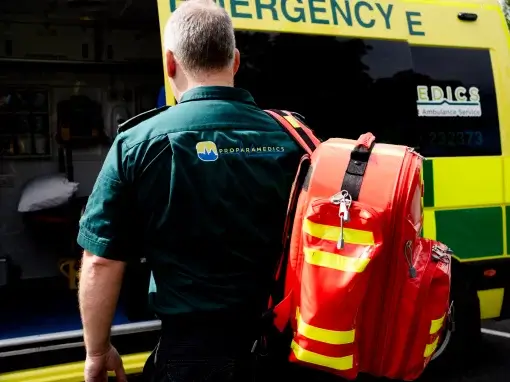
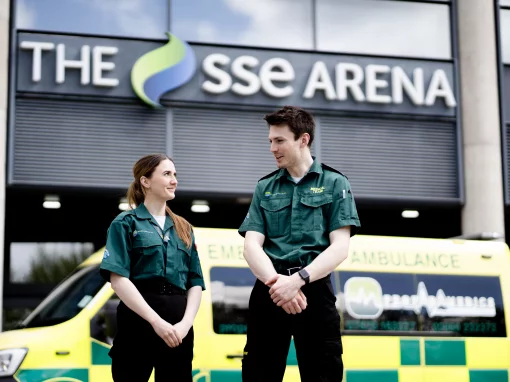
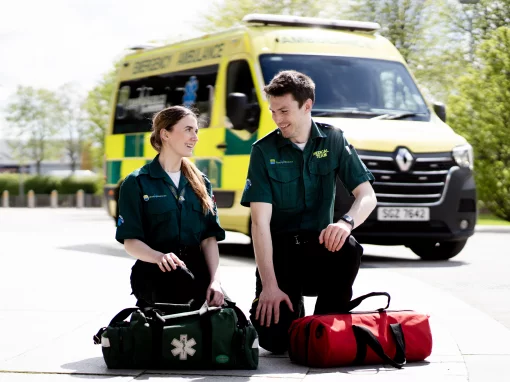
Every concert, match, festival and race in Northern Ireland has a medical team behind it. Most people walking past never notice them. If you have ever looked at that team and wondered how you get there, this is the route, step by step, from a team that both trains and employs event medics.
What an event medic actually does
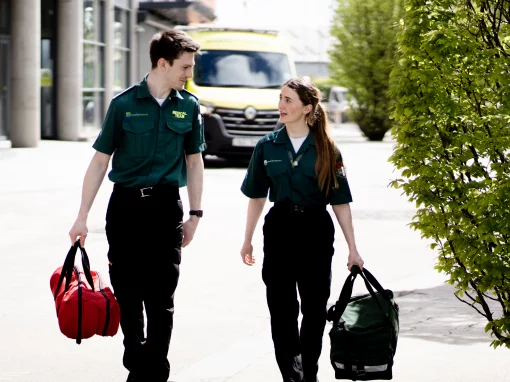
An event medic provides first response care at public events. That covers everything from a twisted ankle in the stands to a collapse in a crowd, and a great deal of time in between spent watching, checking kit and being ready.
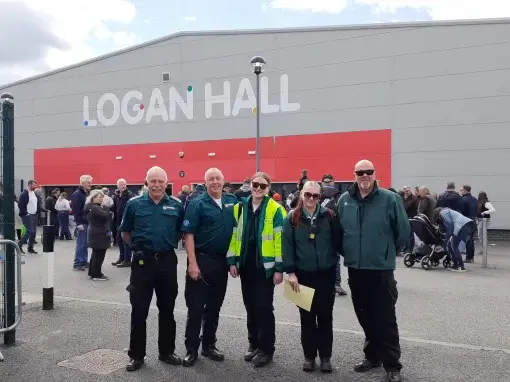
The work is varied. A Saturday at a rugby ground, a long shift at a music festival, a cold morning at a trail race, an arena concert on a weeknight. Some events last a few hours. Some run for days. What stays the same is the standard of care and the need to stay sharp when nothing is happening.
Step one: FREC 3
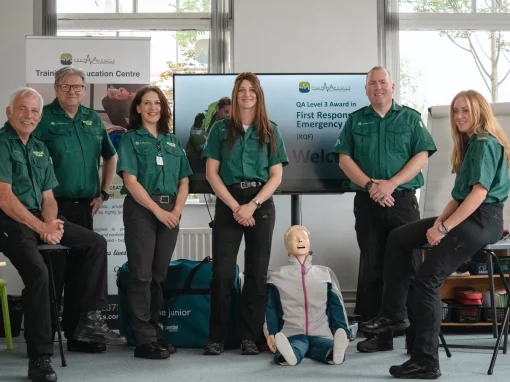
The starting point for most event medics in Northern Ireland is FREC 3, the Qualsafe Level 3 Award in First Response Emergency Care. It is a five day course regulated by Ofqual and recognised across the UK.
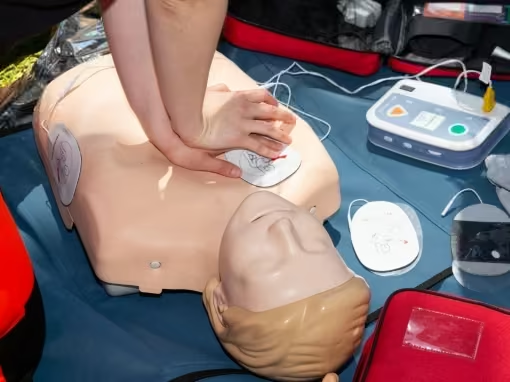
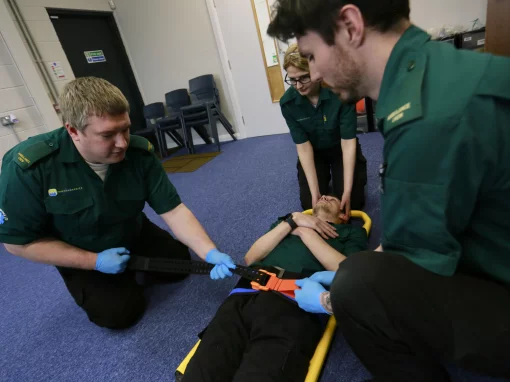
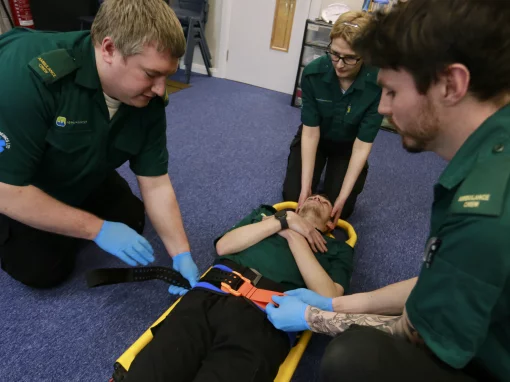
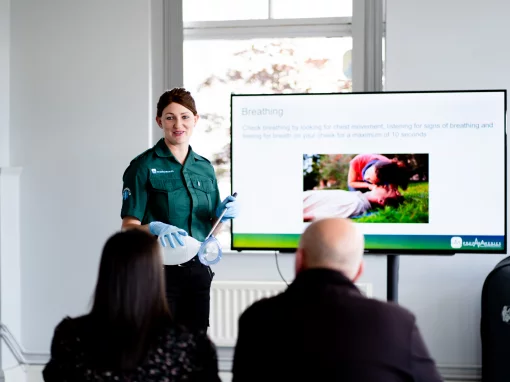
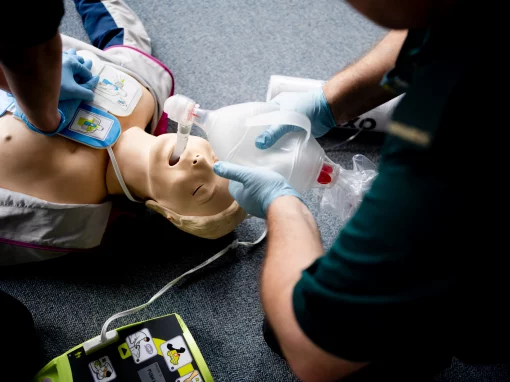
FREC 3 covers scene safety, patient assessment, airway management, oxygen therapy, trauma, bleeding control and the medical emergencies a first responder is expected to recognise and manage until an ambulance crew takes over. It is practical from the first morning. You spend most of the week on the floor with kit, working through scenarios, and the course finishes with six practical assessments.
It is the same qualification held by many security staff, film and TV production medics and patient transport crews, so it opens more than one door.
Step two: get experience
A certificate gets you considered. Experience gets you trusted. Event providers want to see that you can apply what you learned on a real shift, in the rain, at hour nine.
The usual way in is to start on lower risk events alongside more experienced clinicians. You learn how a medical plan works on the ground, how to brief with stewards, how to hand over a patient, and how to stay alert through the long quiet stretches that make up most of the job.
If you trained with a provider that also runs event cover, ask about work. One of our FREC 3 learners wrote at the end of their course: "Brilliant trainers, held my attention throughout and made the course very fun and interesting, learnt a lot during the week and I am now excited to join ProParamedics."
Step three: FREC 4
FREC 4 is the Level 4 qualification and the natural next step once you have FREC 3 and some time on the ground. It runs over five days and covers advanced patient assessment and monitoring, advanced airway management, a wider range of medical and trauma presentations, and the clinical decision making expected in more senior event roles.
You normally need a valid FREC 3 to start. Some senior or higher risk event positions ask for FREC 4, so check the requirements of the roles you are aiming for. Our guide to FREC 3 vs FREC 4 sets out the differences in more detail.
Keeping it current
FREC 3 and FREC 4 certificates are valid for three years. To stay on a rota you need to requalify before the certificate expires. The FREC 3 requalification is three days rather than five, but only if your current certificate is still in date on the first morning.
Put the expiry date in your calendar the day you qualify. It is the simplest way to avoid repeating the full course.
What makes a good event medic
The clinical skills are the minimum. The people who do well in event work tend to share a few other traits.
Patience. Most of a shift is watching and waiting. The job is to be as sharp at the end as at the start.
Calm under pressure. When something does happen, it is often in a crowd, in poor light, with an audience. Calm spreads.
Good communication. You will talk to stewards, event managers, police, ambulance crews and frightened members of the public, sometimes all in the same ten minutes.
Reliability. Organisers book medical cover so they can stop worrying about it. Turning up on time, in the right kit, with your equipment checked, is part of the clinical standard.
Where to train
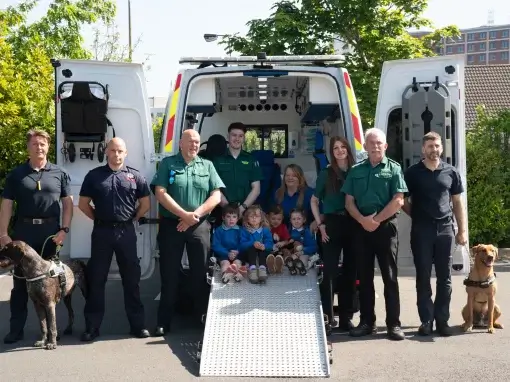
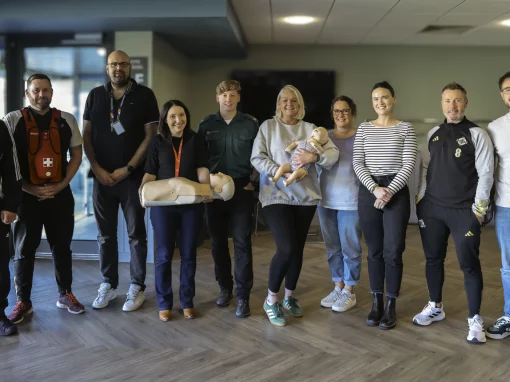
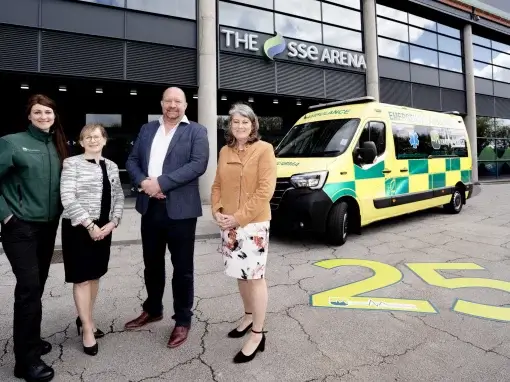
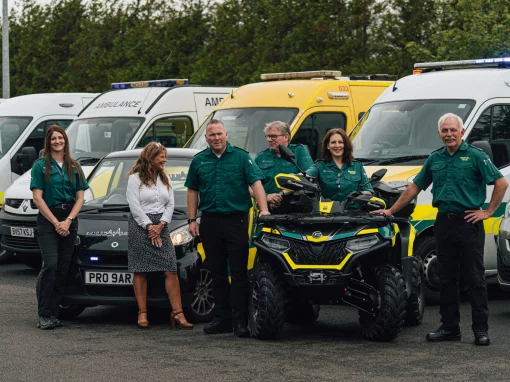
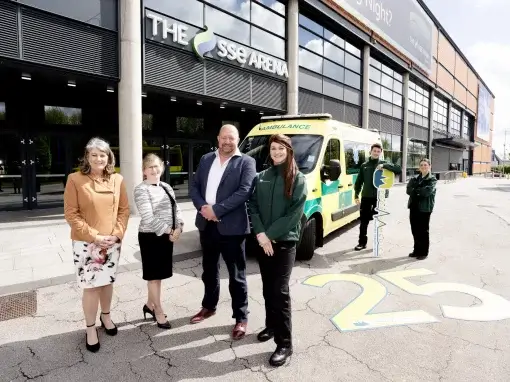
ProParamedics has covered events across Northern Ireland for more than 25 years, including the SSE Arena and the ICC Belfast. Our FREC courses run at our training centre in Moneyreagh, on the edge of Belfast, and every one of our trainers works on ambulances and at events the rest of the week. You learn from people who are doing the job you want.
Questions about which course to start with? Email training@proparamedics.com or call 028 9023 2373. If you already hold FREC 3 or above and want to work with us, email lesley@proparamedics.com.